Showing posts with label marriage equality. Show all posts

Monday, September 11, 2017

For and against the Southern Poverty Law Center

What I remember of the Southern Poverty Law Center is that they had a large and scrupulously maintained database of US hate organizations and individuals, so they were always a good resource for reporters, and even for police and the FBI. Their database also made them invaluable to civil actions against hate groups, several of which were sued into bankruptcy.

I hadn't thought much about the SPLC until a conservative commenter with an anything-goes attitude toward argumentation claimed that the SPLC is itself a hate group. The basis for her dubious claim is that the shooter at the Family Research Council in DC used information from SPLC to target an anti-gay group.

I saw several other claims that SPLC is horrible, and decided to look into it. It appeared that most of the claims against SPLC were due its labeling of anti-gay groups as hate groups. The anti-gay groups and their conservative supporters bristled under the label, believing they were unfairly classed in with the KKK and neo-Nazis. Does this smack of claiming their kind of hate is 'a good kind of hate?'

I read what SPLC had to say about one of these anti-gay groups. The SPLC says that it doesn't label groups as hate groups simply for having labeling homosexuality as wrong or sinful. It had the criteria that the group spread lies, false reports or false research, advocate violence, etc. I noted that SPLC doesn't list the Catholic Church as a hate group, so a group can have religious objections to gays without getting the hated 'hate' label. Fair enough. I decided to contribute for the first time in my life. I felt good about it--that I was making up for lost time and supporting a good organization.

That was starting maybe a year ago, and I contributed 4-5 months ago. Now I'm seeing many more attacks on SPLC. Some of the latest:
  • SPLC doesn't spend much on legal actions, but has a pile of money in offshore accounts.
  • The latest BIG slam is that it mislabels groups and then corporate America cuts off the groups' lifeblood of donations. The Ruth Institute has been cut off in that way, and it has raised a huge amount of attention. (Great PR opportunity!!!!!) I've read 1, 2, 3 articles about the Ruth Institute, the first several weeks ago (no link now) so I was already with familiar with SPLC's rationale for listing it as a hate group. The leader of the Ruth Institute has a long history with anti-gay groups such as the National Organization for Marriage.
My theory is that SPLC is getting notice because of the Charlottesville incidents. Its database provides a lot of information about the white nationalists groups involved, and that makes it look like a strong, helpful, civil-minded organization. Now, if you're a conservative with a chip on your shoulder, you don't like SPLC getting any credit, so you want to attack their credibility. So trot out the old complaints and any current complaints you can find. Call them a far-left group or whatever. The weak-minded will repeat it. For me, I've looked into their explanation for the criteria for listing a hate group, and it's solid. If you support a conservative group labeled as such, maybe you should ask them to cut out the lies and hate, and clear the air on what they actually support. That's my recommendation. Belly-aching that someone is calling you names that you don't deserve doesn't cut it.

A mild message from the progenitor of the Ruth Institute
Image: usnews.com

Extras. SPLC has good reporting on many of the rallies where greater or lesser amounts of violence has broken out. That's helpful too. However, if they are indeed sitting on a pile of money, I may not contribute again. I'll give to other organizations, and give verbal support and clicks to SPLC.

SPLC reports: The rift between the militias and alt-right groups. Many militias want to be open to blacks, particularly military veterans. They share some views with alt-right groups, but not white supremacy. That's why militias will often provide neutral security and stand between alt-right groups and counterprotesters. They support free speech rights, but think a lot of the slogans are rubbish and therefore won't be into the shouting wars and other skirmishes. This is what I've gleaned from reading. Possibly it's wrong.

The killer of two on a Portland train claimed he was protecting free speech. I hope this is wrong and fails as a defense strategy. The killer was outnumbered by three men defending Muslims. Will he claim he feared for his life?

More reporting from in and around Portland. Campus allegations and counter-allegations, protests and counter-protests.

Sunday, September 13, 2015

An alternative to sending Kim Davis to jail

If you're a judge trying to ensure compliance with the law, what can you do when someone like Kim Davis absolutely and publicly refuses to follow the law?

I'm not sure there's an alternative to 'showing them who's boss,' with 'boss' being the law, not the judge. I think it was correct to send Kim Davis to jail, and it was correct to release her once her office started issuing marriage licenses to all who qualified, including same-sex couples.

This article, however, suggests a very good alternative to jailing Ms. Davis:
Bunning could have simply ordered that, if Davis would not carry out her constitutional obligation to issue marriage licenses on an equal basis, she would be forbidden to issue marriage licenses at all. Under Kentucky law, the responsibility for issuing marriage licenses would then devolve onto Rowan County Judge/Executive Walter “Doc” Blevins, who had expressed willingness to issue the licenses on an equal basis. To ensure that Davis did not reap a windfall from that decision, Bunning could have ordered the county to withhold whatever portion of Davis’s salary was attributable to her marriage-license duties and to use that money to reimburse the judge/executive’s office.
Yes, that does sound a good solution.

Image: kentuckykindredgenealogy.com

Monday, September 7, 2015

The scope of conscience in same-sex marriage

Kim Davis, a protesting county clerk from Kentucky, is in jail today due to contempt of court. The Supreme Court ruled the same-sex couples have the same right to marry that opposite-sex couples do. Then the Supreme Court decided not to review Davis's suit that she should be exempt from issuing marriage licenses to same-sex couples due to her strongly held religious beliefs.

I'm a strong supporter of using your conscience on the job, though you don't always get to. You don't always get to do what feels right because the boss disagrees, or the company policy is X, or it's someone else's job to make that decision.

I don't remember ever having to do something that felt very wrong. And I've never had to deny services to someone who was sorely in need.

Denying services is exactly what Kim Davis wants to do, so she doesn't get my support. If she feels that she can't issue marriage licenses, she can quit her job. If she doesn't want to quit her job (and that feeling is even stronger than her stance against same-sex marriage), she can tell herself that she isn't performing the weddings or even supporting them, she is only do the bureaucratic work of asking the state's questions, filling in answers, and determining whether applicants meet the state requirements.

However, Kim Davis doesn't have the power or mandate to decide who can get married and who can't. She wasn't elected to be the judge of those issues, so she very much oversteps her mandate when she refuses to issue marriage licenses. She ought to decide whether she is going to be a county clerk or going to be an conscientious Christian during her work hours. She wants to be both, but that isn't her remit. She should stop being a spoiled brat insisting on both, grow up, and make up her mind.

Image: ifyouonlynews.com

Extras. Town vs. college in Davis's hometown. Interesting political landscape. More quotes, but not more insight in this article.

Tuesday, July 7, 2015

Surviving the same-sex marriage decision Part 2

First Things had a convenient round-up of reactions to the ruling.

As expected, we had the 'Oh-no-they-didn't' talk about five justices trampling the Constitution. They also trampled the truth about marriage and what's good for society. (Per Ryan Anderson--boy wonder proponent for traditional marriage, now raking in the money as one of the few millennials who's against marriage equality. Save your money, Ryan. That gravy train isn't going to last till retirement.)

Do Something!!!!!!! 

The next writer complained that Anthony Kennedy thinks opponents of gay marriage are motivated by "irrational" animus. If 'irrational' includes religious dogma that you want exempted from rational, non-religious-based scrutiny, then I guess Kennedy is right. The objections to same-sex marriage don't seem to pass the test of secular rationality.

But quick, before someone notices, change the subject to ensuring that plural marriages can be prevented. But will that be effective if you use the same approaches that just failed to protect traditional marriage? Will a Defense of Monogamous Marriage Act work where DOMA failed? Hadley Arkes isn't asking these obvious questions. He's in 'Do something' mode.

Oh, the humanity!

Patrick Deneen:
"What has been most striking all along is not the division, the passion, at times the vitriol. What has been most remarkable is the insistence by same-sex marriage proponents that all dissent be silenced—whether through threats of economic destruction, legal bludgeoning, and now, increasingly by appeal to the raw power of the State. The firing of Brendan Eich was a bellwether for what has now become a commonplace: the fanatical insistence that all opposition be squelched, and more—that even belief in an alternative view of marriage be eradicated."
I'm not sure whether this is correct or not. Same-sex marriage has been a heated political issue largely because traditionalists didn't want to compromise. They have fought reasonable compromises, sponsoring referenda to undo compromise, and now they complain about how passionate it's become. Well, it didn't have to be this way. In fact, I don't know of anyone who's been outed in Massachusetts because they gave money years ago, or voted the wrong way. It was a quiet, fairly peaceful transition. But if you want to turn it into a drag-out fight, then there will be casualties. But you don't get to foist all the blame on the other side when you put on boxing gloves.

Pleasant surprises: A bit of empathy, a bit of realism

Not all the writers were hellfire over the ruling. A nice surprise came from Wesley Hill:
"In countless sermons, songs, Bible studies, and informal pew-side conversations, I heard that message like the peal of a gong: singleness equals alienation, marriage means home. (It’s no wonder, given this theology, that whole ministries sprung up to try to rescue gay people from promiscuity and point them toward “traditional” heterosexual marriage.)"
Unfortunately, Hill thinks the answer is celibacy and spiritual friendships and callings. But he gets part of reason why gays want to marry. Most of the authors don't give a hoot about the deep personal reasons for wanting a spouse.

The realism was from Peter Leithart:
"We should stop acting like an exiled Tsar, hoping for the coup to put us back in the Winter Palace... Culture war continues because, in response to our displacement, we’ve tried to politick our values back on top. We failed...  Attending to our own house is now our best strategy... It’s also the way of peace, perhaps the only way of peace remaining."
Yes, I hope there will be peace. I'm not counting on it, because the resistance to change, compromise, and other people's needs has inflamed a lot of passion and a lot of warriors. And warriors tend to keep on fighting.

Rights for me, not for thee.
Image: inquisitr.com


Extras from the same round-up of opinions:
  • We should have unleashed Bork on them: "Incidentally, today’s ruling demonstrates again how important the 1987 defeat of Robert Bork was, and how much Senate Democrats gained in putting up such a fight against him. It was the defeat of Bork that led to the nomination of Anthony Kennedy."
  • It's all due to those bad, bad Christians who wanted to have sex: "Marriage would not now be hymned as a realm of personal discovery and individual autonomy if Christians had not denigrated celibacy, embraced divorce, and popped the Pill." 

Sunday, July 5, 2015

My pocket analysis of the same-sex marriage ruling

Ok, I broke down and read much of the Supreme Court's same sex marriage ruling. We have conservatives calling the majority opinion jumbled and impossible to follow, and progressives calling the dissents 'hysterical.' So I have to read them, don't I?

I started with Clarence Thomas's dissent. Why? Because the outtakes listed here were the most hilarious. Thomas's dissent was a mess. First he defines 'liberty' as mostly meaning 'freedom of movement.' So he ignores the freedom or right to marry. Even in discussing the most relevant earlier case, he ignores the right to marry, and says the case was important because people could be imprisoned for being a spouse or a minister in an illegal wedding. Yes, it's a bad opinion.

Comparison to prior case law

The most relevant case, Loving v. Virginia, was a 1967 case where Virginia refused to recognize the marriage of a white man and black woman who had married in Washington DC but returned to Virginia to live. The Supreme Court, in its ruling, overturned all state laws against interracial marriages. The analogy couldn't be clearer.

So how does Loving v. Virginia figure in this latest ruling? In the text, Loving is cited 22 times, mostly by the majority. Both Scalia and Alito ignore it, and Thomas makes the wackadoodle argument about imprisonment being the issue, not marriage. No one says that Loving was wrongly decided because it clearly wasn't wrongly decided.

So if Loving was decided correctly, how does this inform the current case? Neither side makes a slam-dunk argument. The majority doesn't hammer home the point of a couple's status changing as one or both cross a state line. That is the most ridiculous aspect of the situation, and why states are compelled to recognize the marriages and divorces performed by other states.

Recognition or chaos

But it's also a bit ridiculous for one state (Massachusetts) to unilaterally change marriage law in all other states. I supposed the other states could have decided to recognize marriages performed in other states, and maybe we wouldn't have had this ruling. But so many states resisted doing so, and the conditions were set for this confrontation. This was absolutely inevitable. Same-sex couples were:
  • Going to get married where they legally could.
  • Going to move to states that refused to recognize their marriages.
  • Going to sue for their rights. 
I can't respect Roberts' dissent because he doesn't acknowledge this. He wants the legislative process to carry on. To make that decision, Roberts has to ignore the rights of couples who are legally married in one jurisdiction but living or traveling in another.

I stopped reading Alito's dissent because he was whining about how religious people were being labeled as bigots. Alito seems to have missed the facts that 1) a Supreme Court ruling can't prevent public opinion from going that way, and 2) a whiny dissent can't prevent it either. I didn't read Scalia's dissent because I figured it would make me too angry.

So, overall, I was disappointed with the reasoning of this decision. No group really wrestled with the problem of states being required to recognize marriages of other states, and what we're going to do when there are conflicts. Are we going to follow Loving, and now this decision, and force them to recognize the marriages, or are we going to do something else? Who gets to decide?

Finally, what happens when a state allow plural marriage? All hell breaks loose again.

Image:skydancingblog.com

Thursday, July 2, 2015

Surviving the same-sex marriage decision

As I wrote often, Rod Dreher, a religious/cultural blogger, regularly moaned about the growing support for same-sex marriage. His complaints reached a pinnacle (or maybe more than one) as he tried to find the culprit for the fall of marriage from a holy sacrament (joining man, woman, and God) to a piece of toilet paper freely available to perverts.

How badly has Dreher freaked out now that the US will have legal same-sex marriage all over the country?

He's not doing too badly. He's on a trip to Italy right now, enjoying the food, history, and street festivals, or preferable all three at the same time. He's got the right idea. Before the total downfall of Western civilization, I'd like to spend more time in Italy too.

Image: theamericanconservative.com

It's rather sentimental of me to wonder whether this opponent has survived the ruling. Not that I really worried that anyone was going to kill himself over this ruling. Nearly everyone saw it coming. Justice Kennedy, the usual swing vote on the Supreme Court, had voted to declare some of DOMA unconstitutional two years ago, so it wouldn't take clairvoyance to foresee this ruling.

So almost all saw this coming. Almost all let the LGBTQ and allies celebrate their victory unmolested. There were rainbow sprinkles all over Facebook, and, with triumphalism, rainbow lighting on the White House. Not exactly tactful or magnanimous.

Image: forum.bandmix.com

Some GOP presidential candidates said stupid things, but that's an everyday occurrence. Let's see, Bobby Jindal called for the money-saving move of abolishing the Supreme Court. I wonder if he followed up with a paean to the Constitution. Based on headlines, Jindal won the 'GOP leader stupid contest' over the perennial winner Ted Cruz. Cruz was probably runner-up, though, with the suggestion that Supreme Court justices face elections every 8 years. This idea suffers from being too complex, especially compared to Jindal's simple and pure stupidity.

Culture warriors warn of several looming crises.
  1. The polygamists are coming!
  2. The pedophiles are coming!
  3. It won't be safe to express anti-gay beliefs.
  4. Churches will lose their tax-exempt status.
  5. This is the final straw that ends marriage in the US.
  6. This is the final straw that ends the American experiment in democracy.
  7. Anyone who doesn't cheer on same-sex marriage will risk losing their job.
Except for the panicking dissenting justices, there aren't many who are still predicting the swift demise of the US, so the response is more moderate than expected. After all, not all these looming crises are completely ludicrous. No, pedophilia won't be legalized, but the concerns about the chilling of viewpoints are well founded. (More posts later on that.)

One fascinating thing I learned is how widespread the gay pride movement is. I looked for images of the rainbow flag, and found it in Venezuela, Brazil, Peru, Mexico, Turkey, Israel, Russia, Serbia, Taiwan, Cambodia, China, and a huge number of images for India. The movement for tolerance is a world-wide phenomenon, not just a parochial battle in the US culture war. I still haven't grasped how momentous this movement is.

Image: citizenside.com


Extra. Perhaps before he left for Italy (judging from the tone), Dreher wrote a hilarious post about the future. It includes: polygamy, gay gated communities, all marriages gone queer, and no religious institutions left standing. No irrationality there! Here is Chicken Little:
"I remember a time, practically the day before yesterday, when conservatives who warned that gay marriage would inevitably deconstruct marriage and family entirely were called paranoid bigots."
This prediction is based on one gay novelist's imagination of life in 2035. But that is enough to declare "gay marriage [will] inevitably deconstruct marriage and family entirely." Yeah, right.

Wednesday, June 10, 2015

Short: Interesting observation on campaign issues

Here's a somewhat biased article on campaign issues from the Daily Beast. It notes that a majority of Americans support Obamacare or want something even more progressive. It also notes that a supermajority of Americans now support same-sex marriage being legally recognized.

What's interesting is that Obamacare probably should be a more defining issue since it affects many more people. But contrary to expectations, marriage may be more important when it comes to voters' decisions because the GOP may make themselves look "prejudiced or out of touch..." And it's easier to see that with same-sex marriage than with the complex issues of healthcare.

I really wish Americans didn't subcontract their thinking out to strident and shallow third parties. But I'm lazy about some things too, so I should be more understanding.

It will be interesting to see if the prediction in this article is correct. But we can't be sure what really affected people in the voting booth. A better indicator may be the chatter in the media and social media. And that will be visible.

Don't be a cranky old fart.
Image: abcnews.go.com


Tuesday, May 5, 2015

Difficult choice of conscience

We've had pizza shop owners, with video running, say that they wouldn't cater a same-sex wedding because they're Christians. I have my doubts that this was a carefully considered statement.

In contrast, here is a Christian photographer trying to work through the issue:
"I've been asked to photograph a same-sex wedding service (legal in my state), and I’ve said no. I wonder if I did the right thing. After all, this is a business, providing a service. Would it be right for me to refuse to serve a gay couple if I owned a restaurant? I don’t think so... Moreover, I’m not sure that photographing an event is an endorsement of that event. I have photographed weddings of people who were divorced (and I didn’t investigate the background), people who were probably cohabiting, people who were most likely unequally yoked to one another, and so on. 
So I’m kind of caught. My conscience bothers me because I turned this couple down, and my conscience will bother me if I photograph this wedding."
Here, thank God, is a person who sees the different sides of the issue. Is it fair to hold same-sex people as worse and different from the other sinners he photographs--though note that he doesn't 'investigate' the details of his clients' sins. He seems to take a reasonable, business-like approach that their sins aren't really his concern. That was probably how Christian photographers, bakers, and caterers handled divorced, cohabiting, and all the others who weren't holding off on sex until marriage. Perhaps most of these Christian businesspeople didn't even think of these couples as sinful. 

I personally don't believe the biblical sexual rules are correct or are the commandments of God. I'm not sure what sexual rules are correct, or how much it's a matter of morality (this is right, that is wrong) rather than a matter of risk (don't have sex until you know the person fairly well). 

As for the commandments of God, I have no sense of that at all, except that we should do good and not waste our lives. I don't believe, as my parents did, that sex before marriage is wrong, and God says so. In fact, I find that idea either absurd or a cultural/historical artifact.

So I think anti-gay bias is another cultural/historical artifact, and a lot of Americans seem to agree with that.

Christian conscience, Christian doubt

The Christian photographer raising the question of conscience wasn't sure. The minister answering wasn't sure either. What is sad is that the minister doesn't grapple with the issue of why it's moral to serve gay patrons at a restaurant, but not at their wedding. The minister's decision comes down to the problem of giving mixed messages to those around you as to whether same-sex marriage is OK or not. This seems odd to me that the issue comes down to not wanting to confuse other people--that doesn't seem typical for moral issues, that you don't do X because it might confuse people. I have to wonder whether the minister couldn't come up with a better reason, and had to settle for this weak one--since he wasn't going to go the hate/abomination route. 

Strict Christians will be grappling with these issues, but they've done it before, as sexual mores have changed. Courts have told Christians that they couldn't deny rentals to unmarried, cohabiting couples. I don't recall a major backlash over that. Perhaps it seemed too much like not renting to black couples or interracial couples, so the Christian landlords didn't want to go there. 

Perhaps it's an issue for more Christians this time because they can play the underdog against the powerful liberal tide. Gay couples have helped their underdog status by suing them even when the same services from other vendors are readily available. But whether in suing or in refusing, conscience rarely (but occasionally) seems to be the main concern.

Image: cartoonmovement.com

Extras. NY farm owners stopped doing weddings (but not receptions) I hope they found their comfort zone. Julian Sanchez doesn't know where to draw the line either. A list of objectors--a mixed bag.

These Christians seem to think that they're the sole possessors of rigorous thinking. They are also the stalwarts who "refuse to call what is good evil, and what is evil, good." They imagine that they have a monopoly on right thinking, and I intensely dislike monopolies.

Thursday, April 30, 2015

Can I make decisions based on conscience?

Yes, I can and I do. In my field of work (healthcare), I've had to deal with issues of judgment and conscience. I've broken company rules to comply with the wishes of a dying patient. (That was an easy decision, by the way.) I've told doctors that I wouldn't perform actions that they requested. I've done my best to make sure that even someone who was frequently an asshole was treated fairly.

I don't want a job where I can't exercise judgment--where my boss or the company policies are the final word on all matters.

Yet that's what is contemplated for some small business owners. They don't have the privilege of turning down work based on conscience, if their conscience tells them it's wrong to participate in same-sex weddings.

I'm not saying that everyone who declares that they'll never be part of a same-sex wedding has examined their conscience. We all know that some people don't examine anything, but are zipperheads in the thrall of talk radio blowhards like Rush Limbaugh. Here's a mechanic who won't fix cars for clearly gay men. This guy is not a conscientious objector--he's an anti-gay bigot. There's nothing in Christianity telling him that doing diagnostics on a gay man's car is aiding and abetting sin. His decision is not as a Christian but as a hater.

But I have no doubt that there are many wonderful Christians who are sincerely against same-sex marriage. I hope there's room for their consciences just as I want there to be room for mine.

Image: consciencelaws.org

Tuesday, April 21, 2015

Finally, my conclusion. Marriage equality, yes. Conscience, yes.

I've wrestled with the issue of good religious people and their objection to same-sex marriage. Long ago I saw the essential equality of all marriages. I support the freedom to marry, without stigma, outside of the cultural norms (which are often cultural strait-jackets).

But I also understand and respect deep religious faith. Many of the most generous, loving people I've ever known have religious beliefs that would condemn me to hell for all eternity. These are the kind of people who would risk their own lives doing missionary work in unsafe areas of the world. How can I condemn people who are so much more generous and open-hearted than I am?

Eventually, I realized a formula. You don't have to support marriage equality, but don't deny it to other people. Don't set yourself up as the judge who decides which humans deserve which human rights.

Finally, I had to wrestle with the issue of whether people who are sincerely against same-sex marriage must be forced to provide services to those weddings. Does the florist have to provide flowers, does the baker have to provide a cake, does the photographer have to capture the moment of the grooms exchanging rings and kissing?

Anti-discrimination rules for public accommodations

Our country been through a similar issue before. If you run a public business, under civil rights laws, you can't discriminate against people of different races, ethnicity, religion, gender, disability status, etc. This was a correct decision. The rights of a business owner don't trump the rights of the public to go about their lives without discrimination in the public sphere. No one is forced to like whites, to privately socialize with people of a disfavored religion, to invite them into your home. But in the public sphere, who must treat them as you treat everyone else--with fairness.

Sexual orientation isn't currently on the list of characteristics that can't be discriminated against. I think it should be, and it is in many states. In general, public opinion reviles discrimination on the basis of sexual orientation. Most people support fairness for gays in all areas of life, including employment, housing, court, etc.

However, requiring fairness doesn't mean that we (the public) require everyone to view gay sexual choices as equal to other kinds of choices. I don't have to declare that I totally support all kinds of sexual freedom as good and wise, just like I don't have to declare that Tea Party political opinions are just correct as my opinions. I'm not just 'allowed' to disagree--I have the freedom to disagree.

So it is with business owners. They may have to operate as though they are fair and unbiased, but aren't required to adopt those beliefs.

Remember 'Live and Let Live?'

When support for gay rights was much less popular, some of the appeals were for understanding and tolerance of different viewpoints. These were good arguments. Why not live-and-let-live? Can't we give space to people to have different religions, different sexual interests, different languages, different political beliefs? Generally, we want to say 'yes' to this. We aren't required to all think and do the same.

So why doesn't this extend to the florist who is a devout Christian? Doesn't she get to live-and-let-live without being hauled into court for not wanting to participate in a same-sex wedding?

Are there limits to how far live-and-let-live goes? Certainly. It's not a carte-blanche to loudly and obnoxiously tell people that you don't like their kind, and therefore you won't have anything to do with them. It doesn't undermine the right of others to expect fair treatment in employment.

I'd like to draw the line on live-and-let-live somewhere short of compelling people to take part in acts they profoundly disagree with. But they still don't get to be bigoted about it. Can I make a conscience-exception only for the sincere people, and not for the bigots? That's the question.

Image: pantheos.com

Thursday, April 10, 2014

How far to take this disagreement?

Some people, like me and most people I know, support marriage equality that permits marriage regardless of gender or sexual orientation. I write about this a lot because I love being married, and I know many people for whom this bond is the best part of life. So I want anyone to be able to share in this blessing.

What about the people who disagree? I've written about my respect for those who sincerely believe that same-sex sexual relationships are wrong or that same-sex marriage is wrong. I've also written that those against marriage equality should stop objecting and stop denying the civil rights of others.

Am I totally confused? I hope not. I see a big picture with lots of people in it. Most of the people are good and have honest intentions, yet they often end up disagreeing. I'm not going to demonize a good person just for holding a belief I find mistaken. For a loud, obnoxious person, I'm going to disagree a lot more loudly.

Theory in practice

So, what kind of person is Brendan Eich, the CEO of Mozilla who just resigned under a cloud due to his contribution in favor of an anti-marriage-equality proposition in California?

I don't know what kind of person he is. In my research, I didn't find that he's been a vocal opponent of marriage equality. He was a co-founder of Mozilla, and has worked for years in the open source software movement. As far as we know, he didn't harass gay coworkers and he didn't broadcast his political views through the workplace.

So what did he do that was offensive, harassing, or unacceptable? Some are saying that his financial support for Prop 8 in California is over the line. Software developers, including this one, joined together to begin a boycott. Not because Eich just made the contribution (it was five years ago), or because he just started working for Mozilla, or because he was just promoted to CEO. They started the boycott because they wanted an apology, and he refused to give it. So he was forced to resign.

It's hard for me to see this as anything but intolerant, thought-police-like tactics. His choices were to recant his beliefs or go. Do we want such a binary choice presented to our teachers, writers, broadcasters, doctors, nurses, X-ray technicians? Should I refuse service from a waitress who holds different political views, or can we please just have a limited unfraught transaction?

Armed camps

I don't want to have the entire country carved into pro- and anti- camps. I don't have to know the politics of the CEO of the company that made this computer or that made the couch I'm sitting on. The taint of Brendan Eich's contribution didn't seep into Firefox, which I used for years. It doesn't ruin Thunderbird now. Two years ago, a breast cancer charity tried to purge itself of any connection to Planned Parenthood, even though Planned Parenthood helps with breast cancer screenings. It was stupid to think a breast cancer charity needed to be completely pure on the unrelated issue of abortion, yet some people want to force this kind of purity on charities, or businesses, or what have you. It doesn't work--it's crazy or coercive to implement. Is this what we want in our society--litmus tests wherever you turn?

Let's remember--good people can disagree. Many moral, ethical, and policy questions aren't so clear cut that we absolutely know which is the right answer. When there's a way to live and let live, let's do it. I'm not so infallible that I'm going to condemn those who don't agree with me. What happened to other people, the ones who are so sure,  who will condemn, expel, and purge? Do they no longer want a world with diversity? Wasn't that the goal?


Image: theology21.com

Extras.

Friday, March 14, 2014

The delicious irony of Christians in the closet

I absolutely hate when bloggers send volleys back and forth, but this one may be worth following, if only in hopes of seeing a few well-placed shots.

Rod Dreher is whining about how Christians can't say that they disagree with same-sex marriage out of fear of losing their jobs, or just being ostracized. Now, if a Christian worker were to say that he thinks homosexuals are disgusting and subhuman, that might deserve the reaction of dismissal, and certainly would deserve some measure of social exile. But Christians aren't saying anything as crude as that. Instead, they're trying to deny them the civil right of marriage.

There is an easy solution to this: stop denying civil rights to gays, and understand that includes all civil rights, including the right to marry. If you're going to parse which human rights a fellow human should have, you're not fully accepting the humanity of that person.

And don't act so surprised and offended that people are angry with you when you don't want them to have the full complement of civil rights. The message you send when you deny rights is: you aren't as human as me. Would you take away voting rights from gays? The right to own property? The right to shop in the markets? The right of burial? No, most Christians wouldn't take away these rights. So notice that the right to marriage is just as important, and don't stand in the way of it happening.

I've written before that I understand the deeply held religious beliefs, but religious people, like all people, must learn how to behave in a diverse society. That includes tempering your statements or paying the consequences. Rod Dreher knows that gay people were forced to hide their beliefs for a very long time:
"Christians and other traditionalists were wrong to have demonized gay people in the past, and forced them to live in the closet for fear of their careers."
Yes, and Christians are still wrong if they think they have to power or the right to choose which rights are granted to gays. The whole idea of rights "being granted" is wrong, as though gays were inferior, but their superiors deigned to pretend otherwise to a certain extent.

Rod Dreher again:
"Gay rights activists did a lot of good work to end this climate of fear, and to wake the rest of us up to the humanity of our gay brothers and sisters, and to increase tolerance for them."
Rod, finish waking up, and see that gays have the same right to marriage as you do, as Jews do, as Christians do, as Muslims do, as all people do. You don't have to support it, like it, celebrate it, but just get out of the way. And if you want to stand in the way of others' civil rights, stop whining that traffic is coming your way.

Image: memegenerator.net

Extra. Andrew Sullivan's reply. There are no doubt other posts as well, but I'm not going to chase them down.

Friday, December 20, 2013

Short: Pop the cork in Utah

A federal judge ruled that marriage must be available to same-sex partners in Utah, prompting couples to flood county clerk's offices. I guess same-day marriage is permitted in Utah too. (When I got married in New York, you had to get the license a few days in advance.)

The federal judge didn't stay the decision even though it's predictable that it will be appealed. That allowed the couples to GO FOR IT in what may be a 1-day window to get legally married. If California is a precedent, these happy couples will remain married even if the ruling is overturned. Here are some of the joyous couples in line for licenses:

Image: KSL.com

Tuesday, July 2, 2013

DOMA argle-bargle

I started reading significant Supreme Court rulings last year with the Obamacare ruling. Luckily there hasn't been another ruling I felt compelled to read... until the DOMA ruling in June. A layman's opinion is only mostly useless, but I persist because I want to read and critique the arguments that the justices make.

Majority opinion
The majority opinion spends pages 4-13 justifying taking the case. I readily see how it was justified, since the issues were about due process and especially equal protection. That sounds constitutional to me. After all the justifications, the majority finally indicates its decision at p.20. It threw out section 3 of DOMA for violating equal protection and due process. The 5 to 4 majority is rather harsh about the objectives and motivations behind DOMA:
"The avowed purpose and practical effect of the law here in question are to impose a disadvantage, a separate status, and so a stigma upon all who enter into same-sex marriages..." p.21
The majority, beyond using the words "disadvantage" and "stigma," also labels DOMA's intent or effect as to demean, humiliate, degrade, and disparage the unworthy, second class marriages. However, this isn't just the majority's interpretation. When the House passed DOMA, it did so to express, in the House's own words:
"...both moral disapproval of homosexuality, and a moral conviction that heterosexuality better comports with traditional (especially JudeoChristian) morality." p.21
The majority makes a strong argument for its equal protection ruling:
"DOMA’s principal effect is to identify a subset of state sanctioned marriages and make them unequal." p.22
Their argument is: what the states have determined should be equal, the federal government has tried to undo. That sounds like a clear violation of equal protection to me. Not everyone agrees...

Scalia dissent 
Scalia rips into the majority. First, he argues for pages why the Court shouldn't have taken the case, while ignoring all the reasons it should have. Though there were clearly constitutional issues, Scalia claims that the Court can only make such interpretations when it has a case it must settle, regardless of how many other obvious cases on the same issue might be out there (p.2). He would have liked the case to stay out of court until there was a GOP administration that would enforce DOMA and defend it whole-hog. If Obama thinks DOMA is unconstitutional, he just shouldn't enforce it. (Then we could have the nauseating whiplash of DOMA rules changing every four or eight years. But that's not a reason to hear the case now, according to Scalia.)

Scalia does correctly point out that DOMA could be construed as having a positive purpose--consistency of federal response to marriage (p.20). He errs by imputing only good intentions to DOMA, but he shows that the majority errs by imputing only nasty intentions.

Scalia makes a slippery slope argument that the Court will next make same-sex marriage legal in all states, imagining the exact words the Court could use to force same-sex marriage on all states (p.23). Having divined what (he thinks) the majority wants, he then uses the harshest language in the entire decision, but projects it onto the majority:
"[the] Court ... finds it so horrific that Congress irrationally and hatefully robbed same-sex couples of the 'personhood and dignity'... By formally declaring anyone opposed to same-sex marriage an enemy of human decency, the majority..." p.24
Wow. I thought the majority emphasized the unfairness a bit too much, but Scalia saw their bet and went all in. I don't think the majority declared that those who are against same-sex marriage are devoid of human decency, but it must be so because Scalia says it is.

Scalia doesn't bother to discuss the equal protection considerations. That seems to be the crux to me, and hard to defeat, so it's no wonder he doesn't touch it.

The most quoted part of Scalia's dissent was his labeling of the majority's reasoning as "argle-bargle" (p.22). No Scalia dissent is complete without some sort of ridicule of the majority's line of reasoning, but the "argle-bargle" quip wasn't nearly the worst of it.

Alito dissent
Unlike Scalia, Alito spends most of his dissent grappling with the question of equal protection. At times, he's just dismissive: "that framework is ill suited for use in evaluating the constitutionality of laws based on the traditional understanding of marriage" (p.10). He spends a long time on classifications and scrutiny questions relating to which classes deserve "equal protection" and which don't.

At the end, he lauds the majority's emphasis on letting states decide. Then for no reason I can see, he blithely skips over equal protection considerations. Sorry folks, no equal protection for you. Still, he "respectfully dissents," in marked contrast to Scalia's fierce and disrespectful dissent.

Justice Thomas signed on to Scalia's dissent. Roberts thinks the Court shouldn't have taken the case, and dissents to any change in the law. By my score, 6 are OK, 1 is a wimp, and 2 are high-handed, insulting autocrats. If you disagree with me, ARGLE BARGLE!!!!

Image: quickmeme.com

Tuesday, April 9, 2013

Sincerely against same-sex marriage

I've been lucky to have had diversity in friends during my life. And by 'friends,' I don't mean casual acquaintances of a few months or years, but people that I will never forget. Several of these friends have been devout born-again Christians.

I'm not in touch with them now, but I wonder what our conversations about marriage equality would be like. Many fundamentalists follow the dictum "Love the sinner, hate the sin." They may have immense caring and compassion for gay individuals, but they don't accept same-sex relationships as good. (Others are less scrupulous about loving the sinner, and their entire reaction is tilted toward hate.)

I'm not going to discuss the biblical justifications for being for or against same-sex relationships. These arguments have thoroughly hashed out, so I'm sure everyone is familiar with them. No repetition here is required.

When I think of some fundamentalists I've known, I can't predict which doctrine they would follow--against homosexuality per tradition or accepting of homosexuality in God's loving nature. I've certainly seen some friends torn between the harsh judgments of their religious and the love that is also preached and practiced there.

For example, one coworker and I shared many stories about our faiths and families. We also shared a strong work ethic and a serious, responsible attitude to life, so we built up a lot of mutual respect. She knew that I wasn't a saved Christian and didn't believe in an afterlife. I still remember the tears in her eyes as I departed from that job and from her life as an unsaved soul. Her final wish was that someday I would believe in heaven. Not because I was just another soul that was lost, but because I was someone about whom she cared deeply.

So I won't condemn this kind of Christian for being an anti-gay bigot because in her heart there wasn't bigotry or hatred. That doesn't mean I give this kind of Christian a pass. I have pushed some of my born-again friends very hard on abortion, and even harder on doctrine of eternal damnation.

I want them to question some of the received dogmas of their religion, but in doing so, I'm asking for a lot. In effect, I'm saying "Because I'm someone you respect and like, I want you to question the religions ideals that you've held for decades." What right do I have to do that? Only the right of the free exchange of ideas between people who love and respect one another. So I can't condemn them if they decide to stick to the traditional interpretation of the Bible, because I've learned to love and respect them even though we disagree on some fundamental questions. For anyone who'll take the time to really listen, really think, and most of all, really care, I have immense respect.

I don't expect everyone to feel the same way. I won't tell my gay friends to give these Christians a pass. But regarding the ones I've gotten to know well, maybe I'd explain how I can still be friends with anti-marriage-equality advocates. It's something like 'Love the sinner, hate the sin.' On many days I'm the sinner, or the person who's wrong, so I remember not to hate.

Image:  pinterest.com

Extras.
  1. Love the sinner: origin of the phrase.
  2. Love the sinner and deny communion.
  3. Love the sinner, rapture the sinner.
  4. Love the sinner irks this pastor.
  5. Love the sinner or lose the sinner (long).
  6. Love the sinner and don't stand in the way.

Monday, April 1, 2013

Short: Republicans aren't stodgy

Jeff Flake, the new GOP senator from Arizona, wants to assure the country that the GOP is cool too. They are so cool and hip and wired in that someday they will have their own marriage-equality-supporting presidential nominee.

But it won't be him. Nope, he's just too vanilla, with his non-evolving belief in traditional marriage. But someday even the GOP will find someone hip enough to be cool with two dudes saying vows, but who is  still the fulfillment of conservative ideals.

Jeff Flake was one of the first Republicans to suggest how to pick up the pieces after the 2008 election. To me, he's a bit of a bellwether. If he's OK with being on the ticket with a same-sex-supporting candidate, that's great. Except for one problem: there's still only one nationally known GOP politician brave enough to take that stand--Rob Portman. Perhaps this is a signal to others in the GOP: step up if you're brave enough, and we promise not to hunt you down as a RINO.

That's all fine and good, but does the same forbearance apply to other policies too? Can you be non-stodgy on Planned Parenthood, on abortion, on Obamacare or a workable replacement, and still be part of the Grand Old Party? I have my doubts about how cool and modern a GOP politician can get without losing standing, but we'll see.

Image:  theobamadiary.com

Monday, July 30, 2012

Short: That incredible bond (marriage)

Watch this video. It is the eloquent defense of marriage by a lonely widow who misses "that incredible bond." She spoke when the Washington state legislature was debating extending marriage rights to same-sex couples. I hope you laugh and cry like I did.

 Image:songbirdweddings.com

Saturday, June 23, 2012

Getting Married: To have sex or to have babies

I just realized something. The proponents of traditional marriage who say that the purpose of marriage is to provide a good environment for children are ignoring an important point in marriage traditions. Traditionally, you had to get married before you could legally have sex with the object of your desire. So the purpose of marriage was to have sex. If the sex didn't occur, that is, if the marriage wasn't consummated, the marriage could be annulled as though it had never happened. The lack of offspring wasn't enough to annul a marriage, but the lack of sex was.

Now a vast majority of Americans are having sex before marriage. So we don't need to get married to have sex. I think this is why marriage is breaking down in the US. The problem was that sex outside marriage destabilized marriage for many people.

Then again, I don't think that's the reason. Over 95% of Americans are having pre-marital sex, but 95% of marriages haven't destabilized.

More likely is that when society became more accepting of sex before marriage, it also became more accepting of other changes to tradition:
  • Divorce
  • Delayed marriage
  • Delayed childbearing through contraception
  • Voluntary childless marriages
  • Alternative sexual positions and techniques
  • Sequential relationships and sex partners
  • Dating and having sex concurrently with multiple partners (but not too many)
  • Raising children outside marriage
  • Getting married after the birth of a child
  • Women having both careers and children
  • Women in high-commitment jobs
Gosh, with all those other changes, accepting same-sex relationships and marriage doesn't seem like such a big deal. After all, it's apparent traditional lost a long time ago.

This isn't the first time tradition has been challenged. Think of the play The Fiddler on the Roof. It's all about Tevye's daughters breaking the tradition of arranged marriage. Maybe the lesson is that people accept the non-traditional when they see good aspects to the change.

You may now kiss the bride and finally have sex with her.
Photo: some twitter thing

Extra: Heavens! Changes to the Nuptial Mass are arcane to the rest of us.

Wednesday, June 6, 2012

The Campaign: Team insignia

Bernstein wrote a post on Obama's announced support of same-sex marriage and the effect it had on black opinion. In the post, he talks about how people usually support the position they think reflects the team's position:
So it’s not exactly that Obama influenced black opinions, would be my guess. It’s that African American voters who really don’t care very much one way or another about the marriage issue — but do consider themselves on Team Democrat — are now aware that marriage equality is the normal position of that team.
So, I had to wonder--how much of campaigning and connecting with voters is about sending signals about  team affiliation?  I think it's a lot. Just think of all the GOP candidates pledging not to raise any taxes. Or the Dem base in fits of joy when Obama says that the problem is not Medicare and Medicaid and the Ryan budget plan is "unserious."

It explains why so many Republicans say that Obama is a Muslim--it sends the anti-Obama signal. It explains why our blog pages are filled with repeats of the same talking points--commenters use them to identify as Team Democrat or Team Conservative or Team Libertarian. It also explains why I gets blasted so much--if I'm not sending out the right team signals, I must be from Team Enemy.

Maybe someday there will be a team that's a good enough fit for me, and I'll join that team. Then what I say will be identifiably That Team. But when I differ with that team, I'll probably have the same problem as now. However it might be just 10% of the time, not 95% of the time. Or maybe I'd still be identifiable, the way we can identify "gay conservative" or "liberal Catholic" now.

But that is a digression. The real question is how to move past projecting the team's signals to actually discussing issues and influencing people's political decisions. I don't know HOW to do this. Any ideas?

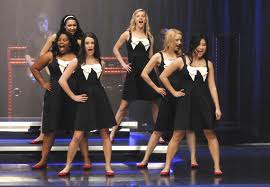
 Team Glee--A Dem franchise from the looks of it
Photo: dailytrojan.com


Extra: Is being a loyal team member the same as tribalism?

Wednesday, May 23, 2012

Obama's small act of courage

A belated post, but maybe still worth a read, and worth getting off my chest.

 Photo: theblaze.com ???
 Here are some of the theories about Obama's announcement that he supports marriage equality:
  • He was scheduled to do it anyway, but Biden jumped the gun.
  • Gays and gay-friendly liberals were withholding contributions, so Obama made the announcement for the campaign money. No courage was involved, just calculation.
  • This will cost him the election because of swing voters in marginal states like Ohio.
  • He shouldn't listen to his daughters but should be a man and tell them homosexuality is not OK - Bristol Palin, world famous expert on sex, family, and marriage.
That's about it. Even at HotAir, the analysis is about the same. The jokes are somewhat coarser but not overwhelmingly so. This actually looks like a yawn.

Yet I think there is something a little more interesting here. There's a strong likelihood of a very close election where a few votes in Ohio make all the difference. If so, this stand could cost him the election. Knowing this, he didn't sugarcoat it. On the other hand, not making the announcement could have cost him the contributions needed to run a campaign that can win.

This is one of those tough choices politicians are sometimes forced to make. It isn't clear what is better electorally. Yet, after the stumble by Biden put Obama on the spot, he actually handled it with some grace. He didn't try to have it both ways, as I felt Bush tried to do on many issues. He didn't delay the decision until after the election, as Bush definitely did with firing Rumsfeld. So, on the whole, not too bad for someone who needs to get reelected, and substantially better than the previous president (who was possibly the worst president of my lifetime, so not a high bar).

Extras:
  • "No Barry, when we said we want a job, that’s not the kind of job we meant." -- HotAir comment
  • "This gay republican supports Obama’s position — if he 'comes out' in support for equality today. Still won’t be voting for him though." -- HotAir comment
  • Bernstein writes that Obama's announcement sent a message to a lot of blacks that same-sex marriage is OK. For the many who didn't have strong opinions in either direction, that's enough for them to flip, so polls of support have changed very quickly. (This phenomenon is common with many voters, not just blacks.)